











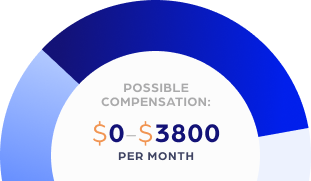
What SSDI benefits can I get in Las Vegas? Those who qualify for Social Security Disability Insurance (SSDI) in Las Vegas may receive a monthly cash payment, benefits for dependents, and access to Medicare coverage after two years. The amount of benefits you receive through SSDI payments depends on your earnings and contributions to the Social Security Administration (SSA) during your working years.
If you are disabled in Las Vegas, consider what you can expect in SSDI benefits, or reach out to a Las Vegas Social Security disability lawyer to help you apply for benefits.
Dependent Benefits
In some situations, SSDI dependent benefits are paid. These are monthly payments made to qualifying spouses and dependent children of disabled workers. It is typically up to 50% of the worker’s benefit amount.
This benefit has a few specific rules:
- Children, including stepchildren and adopted children, up to age 18, or 19 if still in high school, can receive a payment.
- Adult children, who are over the age of 18 with a disability that began before the age of 22, may receive a benefit.
- A spouse who is 62 years of age or older, or of any age if they are caring for a child who is under the age of 16 or a disabled child who is receiving benefits, may qualify.
- If you were married for at least 10 years and divorced, an ex-spouse who is unmarried and over the age of 62 may qualify.
These benefits are up to 50% of the worker’s benefit amount. The total family benefit is usually capped at 150% or 180% of the primary recipient’s benefit, with children receiving priority in those payments. This benefit to children and spouses does not reduce the primary disabled worker’s benefit amount.
SSDI Monthly Cash Payments
Those who are unable to work due to a qualified medical condition may apply for SSDI. If you are eligible, meaning you have a qualifying condition that makes it impossible for you to engage in Substantial Gainful Activity (SGA) and you contributed enough to SSA while working, you may be eligible to receive a monthly payment.
The value of your SSDI benefit is based on the lifetime average earnings that you paid a portion of to Social Security. The SSA will determine your average indexed monthly earnings by identifying your highest-earning years and adjusting those earnings to current-dollar values for inflation. This figure is then put into a formula to determine your final monthly payment.
To find out what your SSDI benefit is likely to be, log in to your Social Security account and use the SSA online calculator there. This is an estimate of your monthly payment if you are approved for disability benefits, based on your specific work history. Note that SSDI payments have a 5-month waiting period from benefit approval to the first payment. You will not receive benefits for that period.
 Wondering if you meet the SSDI requirements?
Medicare Benefits
A person who has a qualifying disability for SSDI may be eligible to receive Medicare after 24 months. This typically means that after receiving approval for Disability, you must wait 24 months before you will receive Medicare benefits.
You do not have to apply for Medicare benefits, as you are automatically approved once you have received SSDI for 24 months. The following typically applies:
- Part A insurance, called hospitalization, is provided to cover hospital stays, hospice care, and some home health services
- Part B, medical insurance, is provided to cover costs associated with doctor visits, equipment you need, and services
- Part D becomes accessible, allowing you to purchase coverage for prescription drugs
- Part C, Medicare Advantage, is an additional coverage that may provide vision and dental coverage for you
Keep in mind that you may be eligible to receive Medicare sooner if you have Lou Gehrig’s Disease or end-stage kidney failure. This means you may not have to wait for those 24 months before you can get Medicare in place to help meet your needs.
Supplemental Security Income (SSI)
Some people eligible for SSDI may also be eligible for SSI in Nevada. It will provide you with an additional monthly payment if you meet the low-income eligibility requirements. To qualify, you must have demonstrated limited income and resources and meet disability requirements set for SSDI.
Your non-exempt resources must be under $2,000 in value for individuals or $3,000 for couples. If you are approved for SSI, you may be automatically approved for Medicaid as well. Medicaid provides access to medical care and may be accessible before Medicare becomes available to you.
SSI requires a separate application process from SSDI. And the process can be confusing, especially when it comes to demonstrating that your assets are low enough in value to qualify. However, you can apply for benefits through an online application process.
Back Pay and Retroactive Benefits
Some people may be eligible for back pay if they did not receive SSDI when they first applied. Back pay is funds you should have received. It applies to benefits you would have received from the date your disability onset occurred to the approval date.
However, the five-month waiting period, which applies to all SSDI recipients, does not apply in this case. It is important to act quickly on these payments if you believe they are owed to you. It will include up to 12 months of retroactive pay prior to the application date if you were disabled during that period or any part of it.
The payment is made to you in a lump sum, typically within 60 days of approval. In some cases, these payments are made in installments.

Work with a Social Security Disability Attorney for Guidance
Applying for SSDI benefits can be complex and requires careful consideration of the strict eligibility requirements.
If you believe you should be receiving SSDI benefits in Las Vegas, contact Shook & Stone Injury Lawyers for a free consultation. We can help you apply with confidence.







 DIRECTIONS